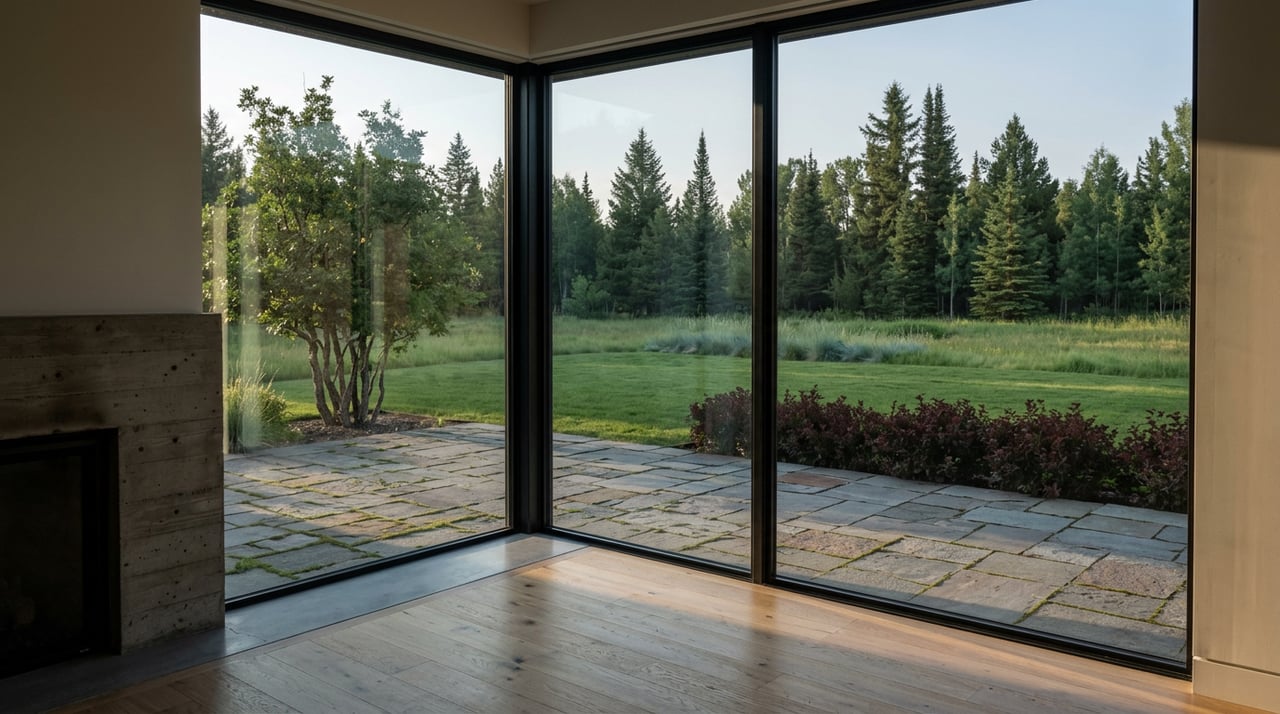
A buyer closes on a home along the fourteenth fairway at Maroon Creek Club. The listing described unobstructed views of the Tom Fazio course, walking distance to the clubhouse, and a lifestyle built around golf, tennis, and skiing at Buttermilk just down the road. What the listing did not mention, because it legally could not, is that none of that comes with the deed. A week after closing, the new owner gets a call from the club about applying for membership. The conversation starts with a number well north of the earnest money deposit.
This is the part of West Aspen real estate that rarely makes it into a broker's pitch: the house and the access are two separate transactions, negotiated with two different parties, on two different timelines. Understanding that split changes how a buyer should read every price tag west of the Castle Creek Bridge.
The club is not the HOA
Homes inside Maroon Creek Club belong to a master association that handles roads, landscaping, and the usual mechanics of a private community. The golf and tennis club is a different legal entity entirely, and it sets its own terms for who gets to use the course. Public reporting on club membership costs puts the initiation fee near $250,000, with annual dues around $38,600, and a waitlist that has kept the club's roster full for years. Buying the house does not put a name on that list. A buyer has to apply, separately, and pay to join a club that has no obligation to expedite anyone just because they now live on its fairway.
That distinction matters most at the offer stage. A buyer pricing a Maroon Creek property against a comparable home in Red Butte or along Cemetery Lane is not comparing like to like unless they also price in a six-figure entry fee and a five-figure annual carrying cost that has nothing to do with the mortgage.
Why the fairway is not entirely private
There is a second layer to this that surprises even longtime second-home owners. Part of the Maroon Creek Club golf course sits on land the club leases from the City of Aspen, and that lease, amended in 1993, requires the club to let a limited slice of the public play the course it might otherwise keep entirely to members. Local reporting on the arrangement describes specific carve-outs: qualifying Pitkin County residents can play up to five rounds a season, and pass holders at the city's municipal course get one round a year at the club, at a rate the lease caps at no more than fifty percent above the city course's own daily fee.
The lease also shapes the experience for non-members in ways a buyer would want to know before assuming exclusivity is absolute. Outside players cannot tee off between 8 and 10 in the morning, since that window is reserved for members.
None of this makes Maroon Creek Club a public course. It remains private, selective, and expensive to join. But a buyer who assumes the fairway view outside the kitchen window is entirely walled off from the rest of Pitkin County is working from an incomplete picture, and that picture is set by a decades-old city lease, not by anything the homeowner controls.
Two very different things both called "ski-in, ski-out"
The membership question is not the only place where West Aspen's marketing language outruns what a buyer is actually purchasing. At Aspen Highlands, the phrase "ski-in, ski-out" covers two products that could not be more different in structure.
On one end sits Thunder Bowl and Exhibition, the two small subdivisions built along the Highlands slopes around 1999 and 2000. Together they hold a fixed 31 home sites, twelve in Thunder Bowl with sweeping views toward Maroon Creek and the Tiehack cliffs, nineteen in Exhibition tucked into more forested, private terrain near the base of the Lower Stein trail. These are fee-simple lots. Buy one, and the home, the land, and the ski access all belong to the owner outright. Robb Report covered the recent listing of one such property, a CCY Architects-designed home known as the Wedge House, priced at $35 million and reached by skiers directly from the slopes via the Thunderbowl Lane underpass. The original buyer reportedly spent close to seven years searching before finding a lot to build on, a detail that says as much about the scarcity of this inventory as any price figure could.
On the other end of the same base area sits the Ritz-Carlton Club Aspen Highlands, where ownership takes the form of fractional interests. A buyer there is purchasing a share structured around a set number of weeks each year rather than a deed to a standing structure. Both products sit inside the same ski village, both get marketed under the same "ski-in, ski-out at Aspen Highlands" language, and both trace back to the same handful of lifts. But one is a real estate purchase in the full sense, and the other is a usage right with an expiration date built into the calendar.
| Thunder Bowl / Exhibition home | Ritz-Carlton Club interest | |
|---|---|---|
| What you own | The land and the structure, fee simple | A fractional share, typically a set number of weeks per year |
| Total supply | 31 home sites, fixed since the 1999-2000 build-out | Multiple interests sold per residence |
| Access to slopes | Direct, year-round, tied to the deed | Direct during your assigned weeks |
| Resale | Sold as a standard single-family transaction | Sold as an interest transfer, subject to the club's terms |
A buyer who walks into a conversation about Aspen Highlands without asking which of these two structures is on the table can end up comparing a $35 million fee-simple estate against a fractional interest priced in the low hundreds of thousands, and drawing the wrong conclusion about what either number represents.
What the neighborhood average is actually blending
West Aspen's headline pricing has moved in a way that makes this distinction more urgent, not less. Year-end analysis published in the Aspen Daily News tracked West Aspen, defined as everything west of the Castle Creek Bridge with an Aspen address, rising from an average sale price of $10.35 million in 2024 to $13.75 million in 2025. The same reporting attributed the increase to access to Aspen Highlands and Buttermilk, proximity to schools, the Aspen Golf Club, and strong neighborhood connectivity.
That average sits across an enormous range of product. It includes family homes along Cemetery Lane with no club obligation attached at all. It includes fee-simple ski estates in Thunder Bowl and Exhibition. It includes Maroon Creek Club properties where the sale price on the county record represents only the first of two checks a buyer will eventually write. A single average cannot tell a buyer which of those they are looking at, and treating $13.75 million as a like-for-like benchmark risks pricing a Cemetery Lane family home against a Maroon Creek estate that carries an invisible six-figure membership cost on top.
What to ask before writing an offer
A buyer working through West Aspen inventory benefits from separating three questions early, before an offer gets drafted.
- Does this property include club membership, or does membership require a separate application, fee, and waitlist position.
- If ski access is part of the appeal, is it a deeded, fee-simple right tied permanently to the home, or a fractional interest limited to certain weeks.
- If there is a private amenity involved, does any public or resident access requirement affect when and how it can be used.
None of these questions show up on a comparative market analysis built from closed sale prices alone. They come from knowing the specific structure behind each address, which is exactly the kind of detail that separates a broker who has walked these streets from one who is reading the same MLS sheet as everyone else.
Frequently asked questions
Does buying a home in Maroon Creek Club automatically make me a member of the golf and tennis club? No. The community's master association and the private club are separate entities. Membership requires a separate application, and public reporting places the initiation fee near $250,000 with annual dues around $38,600, in addition to a waitlist.
Can anyone who isn't a member ever play the Maroon Creek golf course? In limited circumstances. A 1993 lease with the City of Aspen requires the club to allow qualifying Pitkin County residents up to five rounds a season and municipal golf pass holders one round a season, subject to a tee-time blackout reserved for members between 8 and 10 in the morning.
Are all the ski-in, ski-out homes at Aspen Highlands owned the same way? No. Thunder Bowl and Exhibition are fee-simple subdivisions with a fixed 31 home sites. The Ritz-Carlton Club at Aspen Highlands, in the same base area, sells fractional interests entitling owners to specific weeks rather than year-round deeded ownership.
West Aspen rewards buyers who separate what a listing price actually conveys from what it seems to promise. If you are weighing a purchase along Maroon Creek, at Aspen Highlands, or anywhere else west of the bridge, Jamay Shook can walk through what each structure actually entails before you write an offer. Request a confidential Aspen real estate strategy session to start that conversation.


